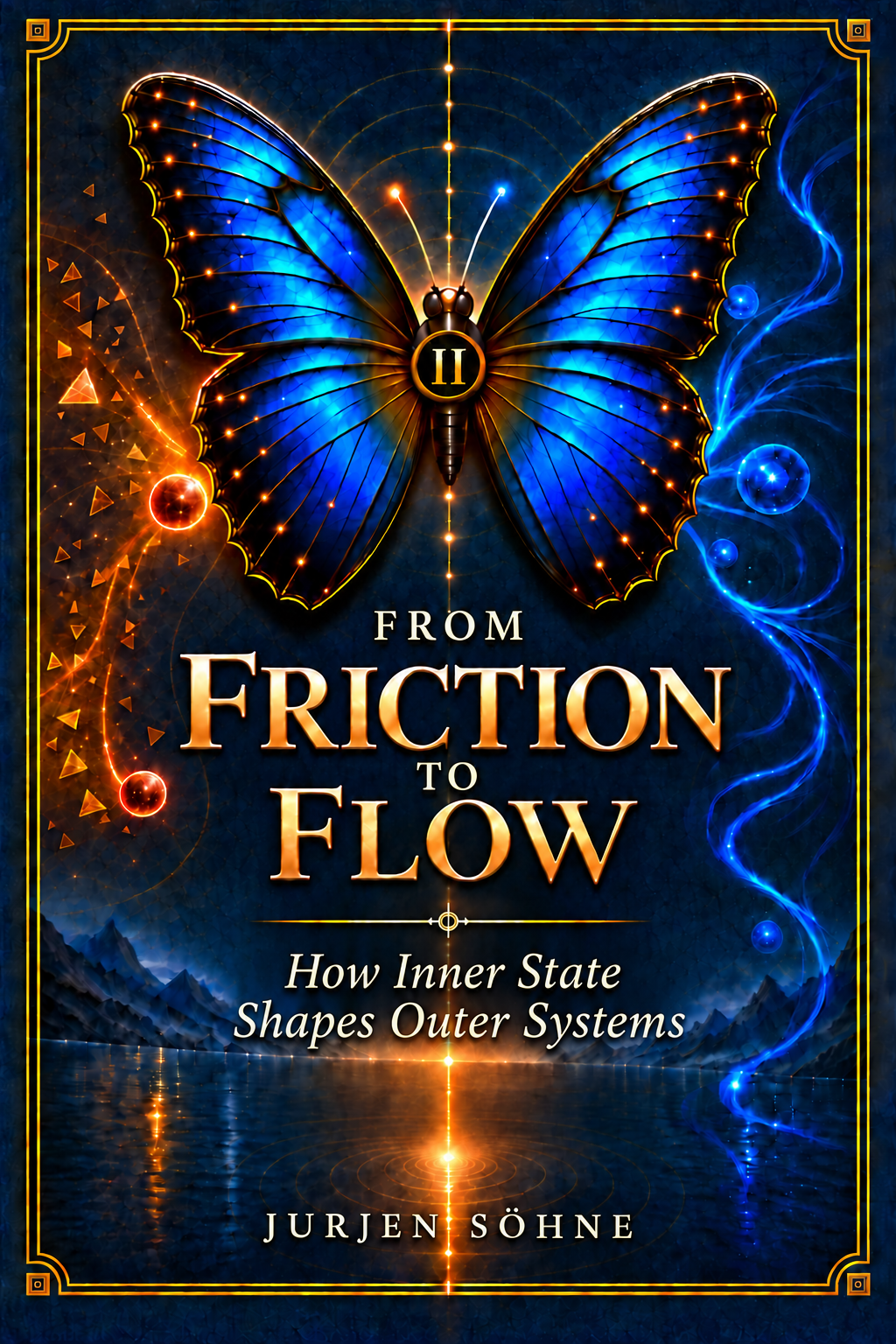
From Friction To Flow
— A new book by Jurjen Söhne —

Your Inner State Is Already Shaping Your Business. The question is whether it is creating clarity or carrying pressure into everything you build.

From Friction to Flow reveals the hidden connection between a founder’s nervous system and the organisation taking shape around them.

Through the Flow Restoration Method, you will learn how to regulate pressure, reveal embedded patterns, restore operational flow and integrate systems that support rather than drain you.

GET THE EBOOK - $20
Ebook only · Instant download

You Built This From Something Real

You built this business from something real. A genuine conviction. Work that mattered before it became a business.

And yet, here you are.

You are awake before the alarm, thumb already moving across your phone screen, your chest already slightly tight before you have read a single message. You told yourself last night you would stop doing this. But the pull is stronger than the promise, and the day begins in reaction before it has technically started.

The business is growing. From the outside, it looks like it is working. But from the inside, it feels heavier than it did a year ago, heavier than it did when it was smaller, and heavier in a way that more planning and more systems have not actually fixed.

The thoughts run something like this:

"Why does everything still end up coming back to me?"
"I thought it would feel easier by now."
"What if I'm the bottleneck and I can't see it clearly enough to fix it?"

If that sounds familiar, you are not alone. The problem is not that you have failed. It is that something has been addressed in the wrong order.

But here is what matters: the weight you are carrying is not evidence that you need more strategy, better systems, or stronger willpower. It is a signal that something deeper has been missed - something that sits much further upstream than most business advice ever reaches.

You Have Been Solving the Right Problem in the Wrong Order

The belief most founders carry is a reasonable one: if the business feels heavy, the answer is better operations. Clearer processes, stronger team structure, smarter tools, more efficient workflows. Fix the external system and the internal pressure will ease.

It seems logical. But it starts in the wrong place.

Not because operations and systems are unimportant. They are genuinely important. But because they are being addressed in the wrong sequence.

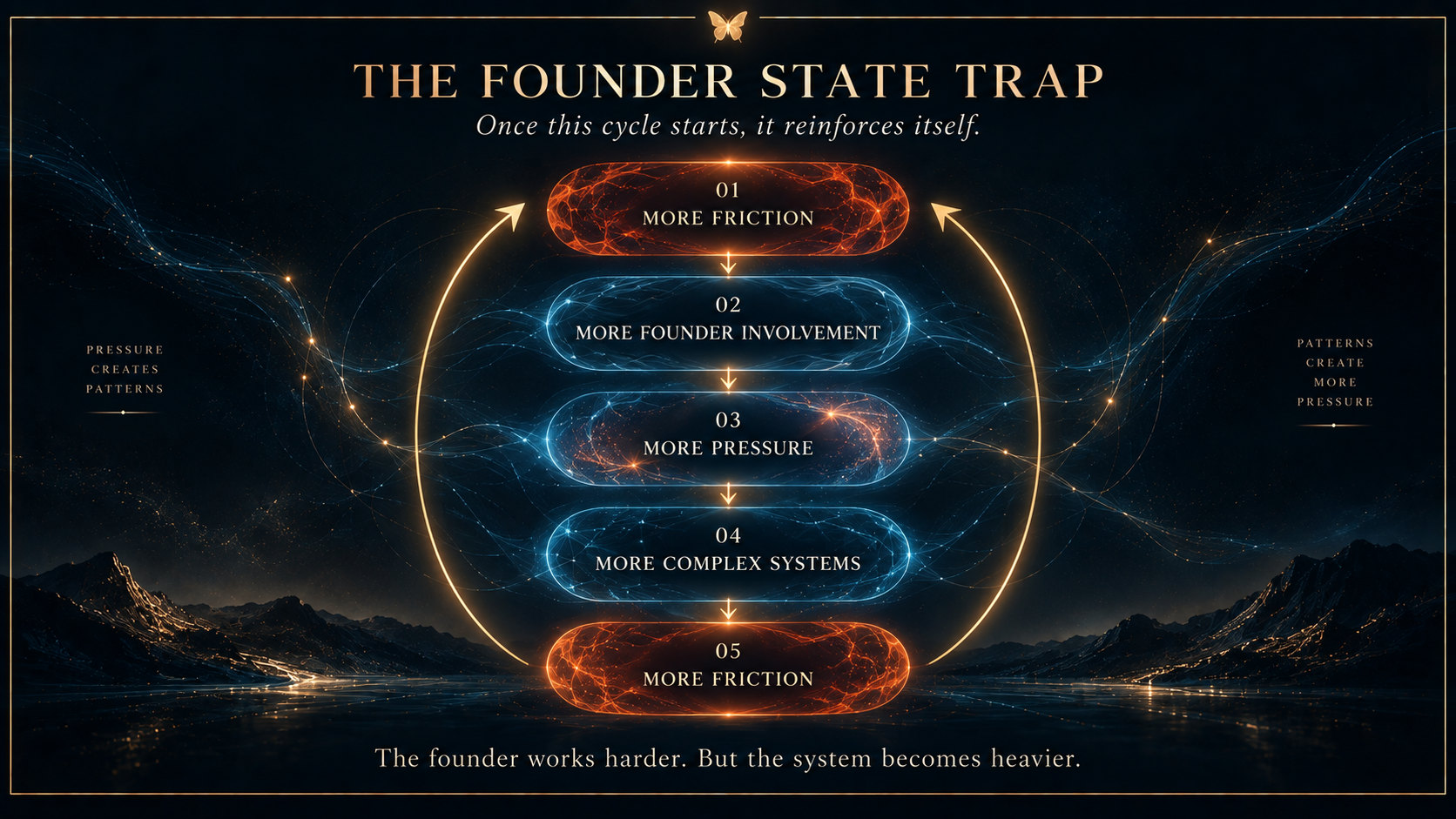
What is almost never discussed is this: a founder does not simply design the systems in their business. They shape them, through every decision made under pressure, every communication sent from urgency, every structure built to manage anxiety rather than create capacity. Over time, the business stops reflecting the founder's vision and starts reflecting the founder's internal state.

When that state is one of chronic urgency, the systems it produces are not calm and clear. They become complicated, founder-dependent and heavy to run. They compensate for pressure rather than creating space.

You cannot optimise your way out of a system built from pressure. You have to go deeper than the system itself.

Every system carries something of the state it was built from.

Why Better Systems Can Still Recreate the Same Pressure

The conventional path is predictable. Hire a consultant. Build a new process. Introduce better technology. Restructure the team. These changes can help. Sometimes they create real relief.

But they share one assumption: that the problem lives entirely in the external structure of the business.

That is where the sequence breaks down.

When a founder is operating from chronic urgency, new systems often inherit that urgency. New processes create more complexity. New tools add cognitive load. The organisation reorganises around pressure rather than capacity.

The problem is not a lack of intelligence. It is a failure of sequence.

Before you redesign the system, something has to shift in the state of the person shaping it.

That is where From Friction to Flow begins.

I Had Been Building From the Same Pressure I Was Trying to Escape

There was a period in my life when everything looked fine from the outside.

I had built a respectable career at the edge of emerging technology. For close to fifteen years, I had been drawn to complex systems, difficult problems and the possibility of redesigning things into a better shape. I ran hackathons aimed at real societal challenges. I was known for moving quickly, solving problems and pushing things forward.

By most external measures, life was going well.

But I was falling apart.

Not visibly. Not in a way I could easily explain to someone who asked. It was more fundamental than that. I could not think clearly. Decisions that had once come easily felt impossibly weighted. When people asked what I wanted to do next, I found something more unsettling than confusion.

I did not know.

By the winter of 2024, I was sitting behind my desk with my head in my hands, staring at the floor. I was not simply stuck. I felt suspended. Depleted. Unable to move. I no longer knew who I was without the constant forward motion.

For years, solving had been part of my identity. There was always another system to improve, another problem worth addressing, another reason not to stop.

And while I kept moving, I never had to notice that my own life had stopped fitting the person I was becoming.

The signals had been there for a long time. I had simply been travelling too fast to read them.

So I stopped trying to solve my way out and went deeper instead. Into healing. Into the body. Into breathwork and cold exposure. Into the patterns that effort and intellect alone had not been able to reach.

At a retreat in the Netherlands, I sat in a psilocybin ceremony with a specific intention: to loosen the fixed patterns that reflection alone had not shifted.

At a certain point, a musician named Merel began to play guitar and directed a song towards me. It was a setting of a poem by Thich Nhat Hanh, Please Call Me by My True Names.

I looked up through the glass panel in the roof of the yurt and cried in a way I had not cried in years.

Not from sadness. From recognition.

For twenty-five years, most people had called me Juri. It began during a journey through Southeast Asia because Jurjen was difficult to pronounce. I accepted it without thinking much about what had shifted. Then I got married, moved to the UK, and the name simply stayed.

The poem asks to be called by all your names. Not the curated version. The whole thing.

Sitting in that yurt, I understood what those twenty-five years had cost. Not with resentment. With recognition. I came out of that ceremony with my name back.

When I left, the retreat placed a small bronze coin in my hand.
Engraved on it was one word: Remember.

In the months that followed, my nervous system began to settle. The chronic urgency beneath every decision, every interaction and every plan started to soften.

What I had mistaken for drive became visible for what it often was: strain.

And from that clearer place, I began to see the same pattern in the founders I was working with.

Their businesses were not only reflecting their strategy.

They were reflecting the state from which they had been built.

State shapes perception. Perception shapes decisions. Decisions shape systems. Systems shape growth.

Regulation-First Growth

The pressure a founder carries does not stay contained within them.

It shapes what they notice, how they interpret events, which decisions feel urgent and how the systems around them are designed.

When the underlying state is chronic urgency, the organisation begins to absorb that pressure. Processes become more complicated. Decisions remain concentrated. New systems inherit the same founder-dependence as the old ones.

Most founders try to change the final part of the sequence while leaving its starting point untouched. Regulation-First Growth reverses that order.

When a founder’s internal state settles, perception clears. False urgency becomes easier to separate from genuine priority. Decisions become less weighted. Behaviour becomes more consistent.

From that foundation, systems can be designed around clarity and capacity rather than pressure and compensation.

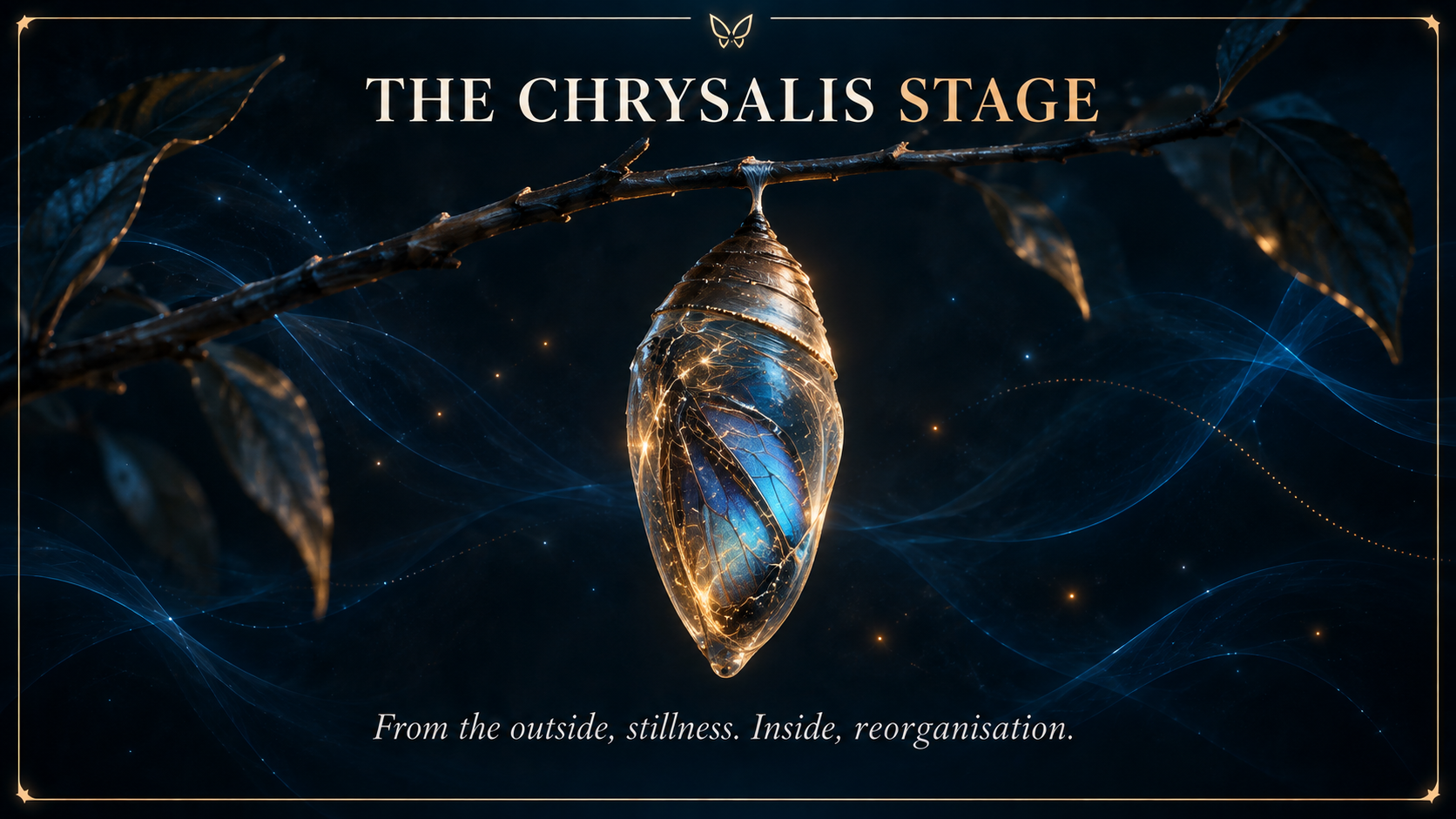
The chrysalis is not a failure. It is a reorganisation.

The caterpillar does not become a more efficient caterpillar. It becomes something capable of moving in an entirely different way.

GET THE EBOOK - $20
Get instant access · Ebook only

The Flow Restoration Method

A four-stage sequence designed to restore alignment between a founder's internal state and the organisation they are trying to build, addressing the root cause rather than its symptoms.

01
Regulate
Restore physiological steadiness and reduce internal noise, so that perception, decision-making, and leadership all operate from a more grounded base. The system cannot be rebuilt from within the same pressure that built it.
02
Reveal
Surface the hidden patterns through which your internal state has shaped your behaviour, your relationships, and your structure, including where pressure, control, vigilance, or over-responsibility became embedded in your decisions, workflows, and team dynamics.
03
Restore
Rebuild operational flow from greater clarity. Systems, communication, workflows, roles, and decision structures are redesigned around capacity rather than pressure, so the business becomes less dependent on you being the centre of everything.
04
Integrate
Embed the new operating pattern through intelligent support, feedback, rhythm, and technology. AI and automation are introduced where they reduce cognitive load, protect attention, and support team autonomy, not to add more tools, but to remove friction from the signal already there.

What Others Are Saying

"I had been describing what Jurjen calls the Founder State Trap to three different coaches without any of them naming it. The moment I read the first two chapters I sent it to my business partner. We are both in it."

— Laura, founder of a mental wellness clinic

"I kept thinking my problem was hiring. This reframed everything. The team dynamics I had been blaming were a downstream effect of something I was creating upstream."

— Marcus, retreat centre founder

"Honestly I was sceptical. I have read a lot of founder books. This one is different in a way I found difficult to put down."

— Caitlin, integrative therapist and practice owner

From One Founder Who Went Through It

"I came to Jurjen's work after five years of building a wellness brand that looked successful from the outside and was quietly exhausting me from the inside. I had good revenue, a team I genuinely respected, and a business that felt heavier every quarter. I assumed the answer was better systems. What I found instead was that I had been building those systems from a state of chronic urgency, and every new process was inheriting the pressure I was carrying. Working through the Flow Restoration Method changed the sequencing of how I lead. I started with regulation. Everything else followed from that. Within three months, two of my core operational bottlenecks had dissolved without me redesigning them. My team started making decisions I used to make for them. I stopped waking up already in reaction mode. The business did not get smaller. It got lighter. That distinction matters enormously when you have been carrying it the way I was."

— Simone R., founder of a conscious wellness brand and retreat programme
Yes! Rush me a copy — $20
Instant download · Ebook only
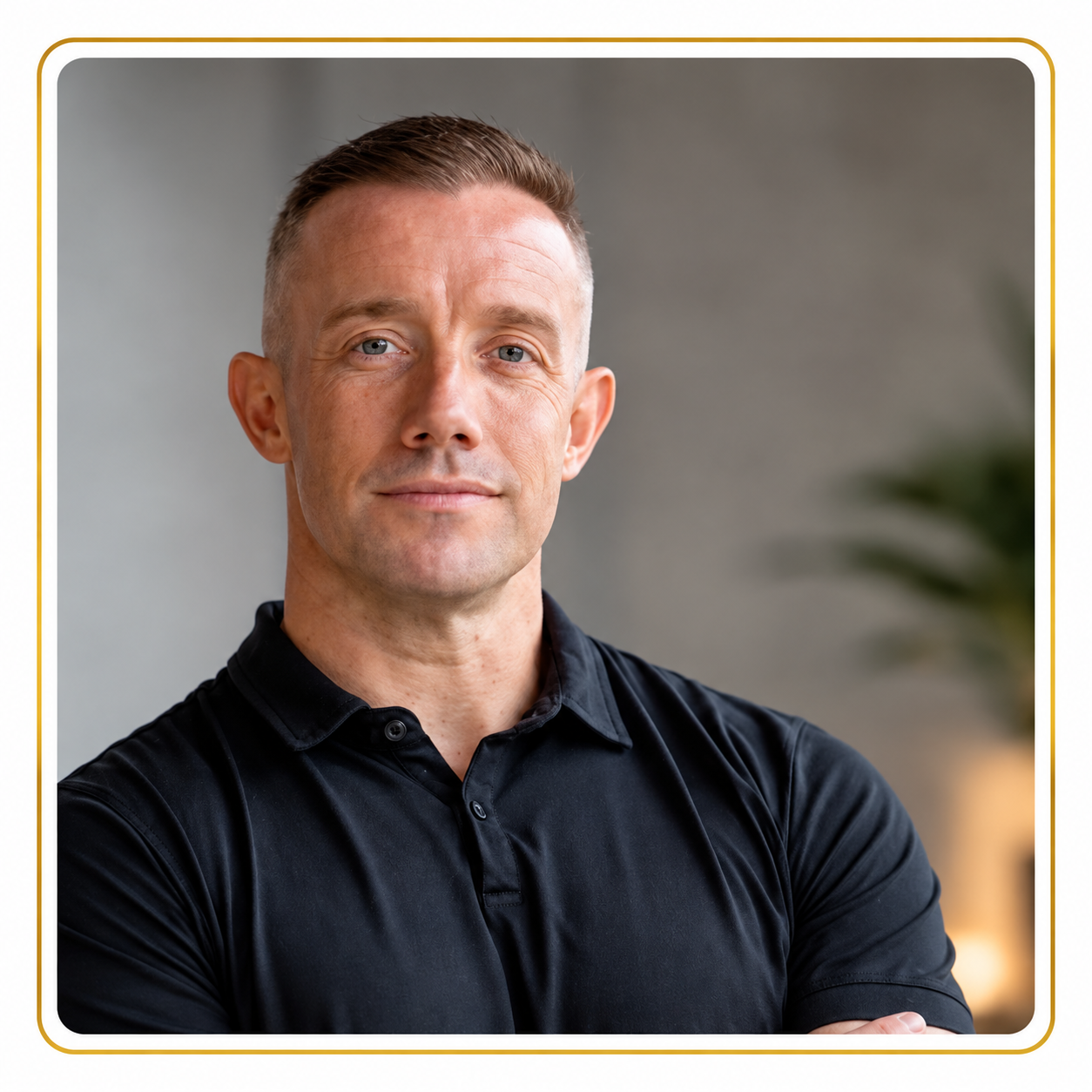
Jurjen Söhne

Jurjen Söhne.

For close to fifteen years, Jurjen worked at the edge of emerging technology, across Internet of Things, 3D body scanning, computer vision, robotics, and blockchain. He ran hackathons aimed at real societal problems. The pull, in every field, was the same: systems that could be redesigned into a better shape.

By the winter of 2024, that relentlessness had caught up with him. Depleted and unable to move forward, he stopped trying to solve his way out and went deeper instead, into breathwork, cold exposure, and a psilocybin ceremony at a retreat in the Netherlands. What he found there, and in the months of recovery that followed, became the foundation of the work in this book.

Today he works with founders in wellness and transformation businesses who are navigating the same pattern he lived through: a business that looks successful from the outside and feels heavier every quarter from the inside. From Friction to Flow is the structured account of what he found, and how the sequence he developed changed things, first for himself, and then for the founders he worked with.

Remember

The business did not get smaller.
It got lighter.
That distinction matters.

Get the book and see the pattern for yourself.

Yes! Rush me a copy — $20
30-day refund · Ebook only · Instant download